For established metal
recycling businesses, processing end-of-life vehicles requires machinery that
can handle bulky vehicle bodies, deliver reliable performance and produce
compact bales for easier storage and transportation.
A metal recycling
company based in Melbourne, Australia, has partnered with ENERPAT to acquire a
new diesel-powered mobile car baler for its existing recycling operations.
The customer was
looking for a heavy-duty solution to process recovered car bodies, with
particular attention to mobility, processing capacity, engine performance,
component quality and long-term reliability.
A Mobile Solution for Scrap Vehicle Processing
The Melbourne recycler
selected a brand-new diesel-powered mobile car baler without an integrated
crane.
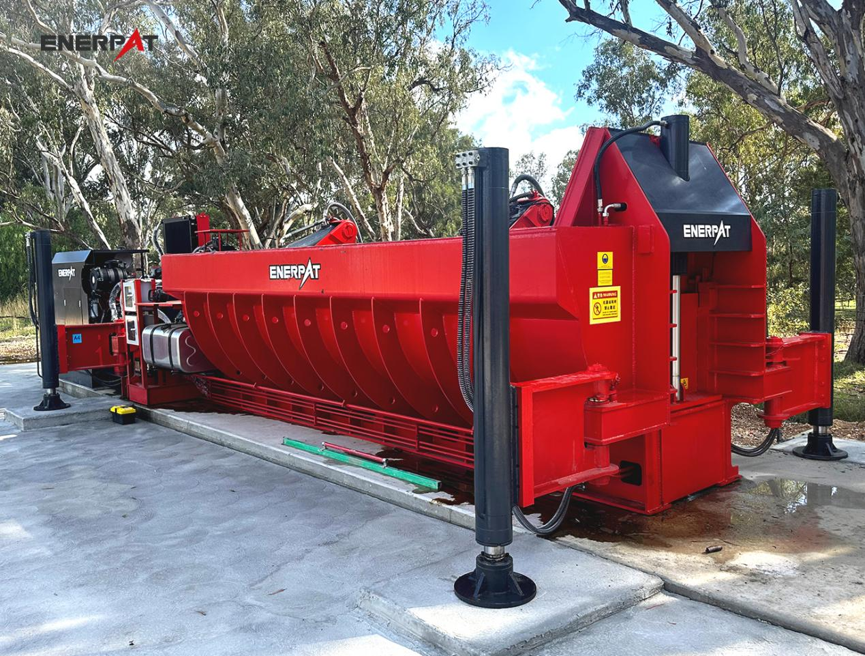
ENERPAT’s SCE5000
Hydraulic Car Baler is designed for heavy-duty vehicle body compression. Its
mobile configuration features four hydraulic support legs, allowing the machine
to be positioned on a suitable level concrete surface without requiring a permanent
foundation.
Powered by a Cummins
160 HP six-cylinder diesel engine, the SCE5000 provides an independent power
source for outdoor recycling operations, offering flexibility in equipment
placement.
Six-Cylinder Compression System
One of the SCE5000’s
key design features is its six-cylinder lid compression system.
The machine
incorporates six 80-ton hydraulic cylinders across two compression stages,
delivering a combined nominal pressing force of 480 tons. This arrangement
helps shape bulky vehicle bodies before the main compression stage, supporting
controlled material preparation and consistent bale formation.
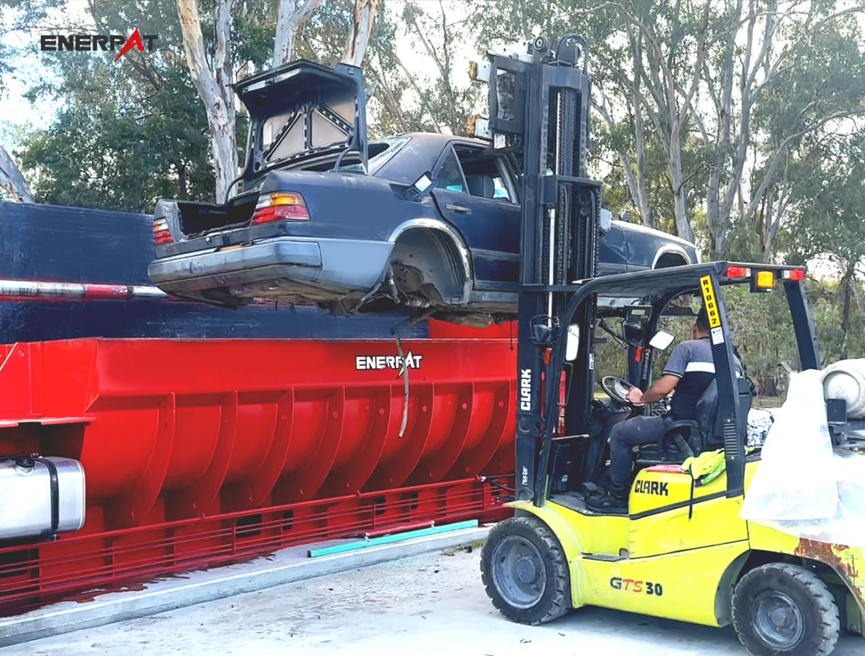
The SCE5000 is designed
to process approximately 10–12 scrap car bodies per hour,
depending on vehicle condition, loading time and operating conditions. This
processing capacity makes it suitable for established vehicle recycling
businesses handling a steady volume of end-of-life vehicles.
Hardox 500 Construction and Hydraulic Components
Processing scrap
vehicle bodies places considerable stress on a baler’s compression chamber and
hydraulic system.
To address these
demands, the SCE5000 features Swedish Hardox 500 wear-resistant steel plates on
the inner chamber walls, providing protection against abrasion during repeated
compression cycles.
Its hydraulic system
incorporates two German Rexroth A4VSO180L main piston pumps, alongside
industrial hydraulic valves and filtration components designed for demanding
operating conditions.
Combined with the
Cummins diesel engine and heavy-duty construction, these components are
selected to support reliable operation and long-term serviceability.
Compact Bales for Easier Material Handling
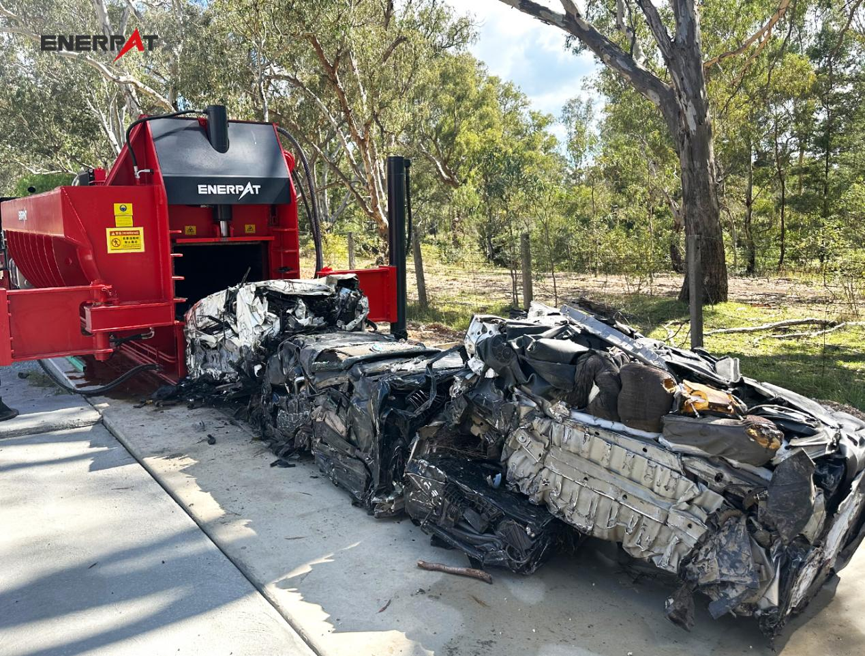
The SCE5000 uses a
front-ejection system to discharge finished bales after compression.
Its standard bale
dimensions are approximately 850 × 650 × 2,200 mm, with an individual bale
weight of around 800 kg, depending on the material.
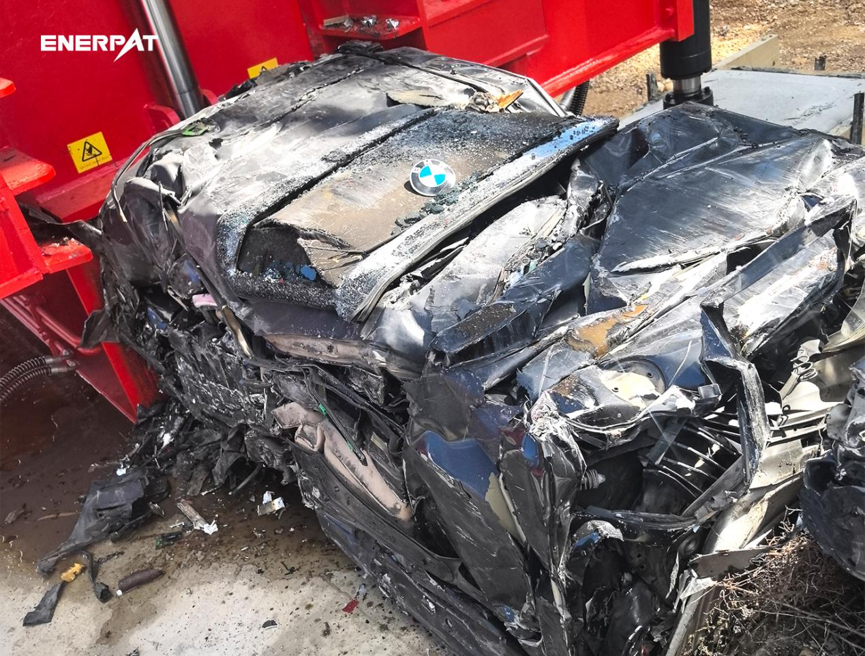
By reducing the volume
of recovered vehicle bodies, the machine can help recycling businesses improve
yard organisation, storage efficiency and downstream transportation.
Factory Inspection and Shipping to Melbourne
For international
machinery purchases, buyers need to consider more than equipment
specifications. Machine weight, factory inspection and transportation
arrangements are also important.
During the purchasing
process, the Melbourne customer requested the machine’s net weight and
discussed visiting the ENERPAT factory to inspect the equipment.
With an approximate
machine weight of 32 tonnes, the SCE5000 features a substantial heavy-duty
structure.
The agreed shipping
arrangement is to transport the complete machine, secured in a frame container,
to Melbourne Port rather than shipping it as separate dismantled components.
Supporting Australian Vehicle Recycling Operations
For established scrap
metal recyclers, investing in a suitable car baler can help reduce the volume
of recovered vehicle bodies, improve material handling and make transportation
more manageable.
The Melbourne
partnership highlights several important considerations when selecting a mobile
car baler: diesel power, processing capacity, compression system design,
wear-resistant construction, hydraulic component quality and international
shipping arrangements.
Through this project,
ENERPAT is supplying a new heavy-duty mobile car baling solution to an
Australian metal recycling business, supporting its ongoing vehicle recycling
operations.
For recyclers
evaluating car balers, understanding how a machine performs in real operating
conditions is just as important as comparing its technical specifications.